
Reading in Public 103: Questions for the brink of a postliterate world
On Monday I sat down at my computer and read the entirety of The Atlantic’s August cover story “The End of Reading is Here” (gift link). I had wanted to wait and read it in print since—as the article itself notes—my print reading attention and retention is much stronger than that of screen reading. But I was impatient, so computer it was.
I have to admit that I was reading it in part with this newsletter in mind. I think of Reading in Public as the place where I both reflect on my personal reading practices and where I get to respond to book discourse at large. I had a lot of issues with Rose Horowitch’s previous cover story titled “The Elite College Students Who Can’t Read Books” (gift link), and went into this newest piece expecting to find points of disagreement that I could possibly tease out in an essay of my own. Instead, I finished feeling pretty aligned with what she was exposing. One of my major points of contention with her essay about college students who “can’t” read, was a lack of contextualization about teaching as a profession and the shifts in education that have made the reading of whole complex novels in the English classroom so difficult. My other gripe was that a many adults, even adults who read a lot, don’t read many big, difficult classics either. I found it incredibly frustrating for a national magazine to be picking on young people (and their teachers) when the adult world they’re surrounded by doesn’t value and model the act of reading dense, complicated works. And this is exactly what Horowitch explores in her new piece.
Yes there’s plenty in the article to pick at. Do we have an overly nostalgic vision of literacy in the past? What other factors besides our waning attention spans are keeping people from reading and talking about books? How is people’s relationship to other art forms changing? And, perhaps most glaringly, the title of the piece is play for clicks and not really indicative of what Horowitch posits. It’s easy to dismiss the whole thing by arguing that she doesn’t prove the statement in her title, but, for me, that’s missing the point and the real cause for alarm in what she’s articulating. The move away from complex texts, the loss of critical thinking skills, the outsourcing of writing—thinking—to AI, the political imperative to simplify ideas into oblivion, the lack of nuance in our person-to-person conversations, are all things I’ve observed as well. It all feels true, or like it will be true soon, even if I can’t demonstratively prove it. I think the article is largely accurate—and that is bleak.
I operate in a highly literate and literary world. My job is writing this Substack: a newsletter about books for avid readers. And I’m not worried about us. I interact daily with people who are curious, passionate, and eager to challenge themselves. Not to mention that this is a group for whom reading is fun and joyful and a source of community—we’re not going to be abandoning our reading anytime soon.
And yet even in the online book world I live in—a world filled with avid readers—I see much of what Horowitch is writing about: a move away from complex texts, a belief that reading the classics is bothersome and unnecessary, and an evangelistic zeal about abandoning books that lag or require too much work. Readers want books that grab them immediately, that cut out any extraneous details and descriptions, that move at a speedy clip. I’ve seen an increased desire for short books and, perhaps even more so, short chapters.
And person to person, on an individual level, all of that is completely fine! People should read what they want and love what they read. In fact, in many senses, all of that is more than fine because when we discover and read what we like, if we don’t feel pressure to stick it out with a book that’s crushing us, we are likely to read more. And that is wonderful! I would never tell any single person that they must finish a book that they don’t like, or read 19th century classics, or supplement their cozy genre fiction with serious nonfiction. I sincerely hope no one will walk away from this essay feeling that I mean to shame any reader for their habits and preferences or that I hope to scold people into eating their literary vegetables before they have their dessert.
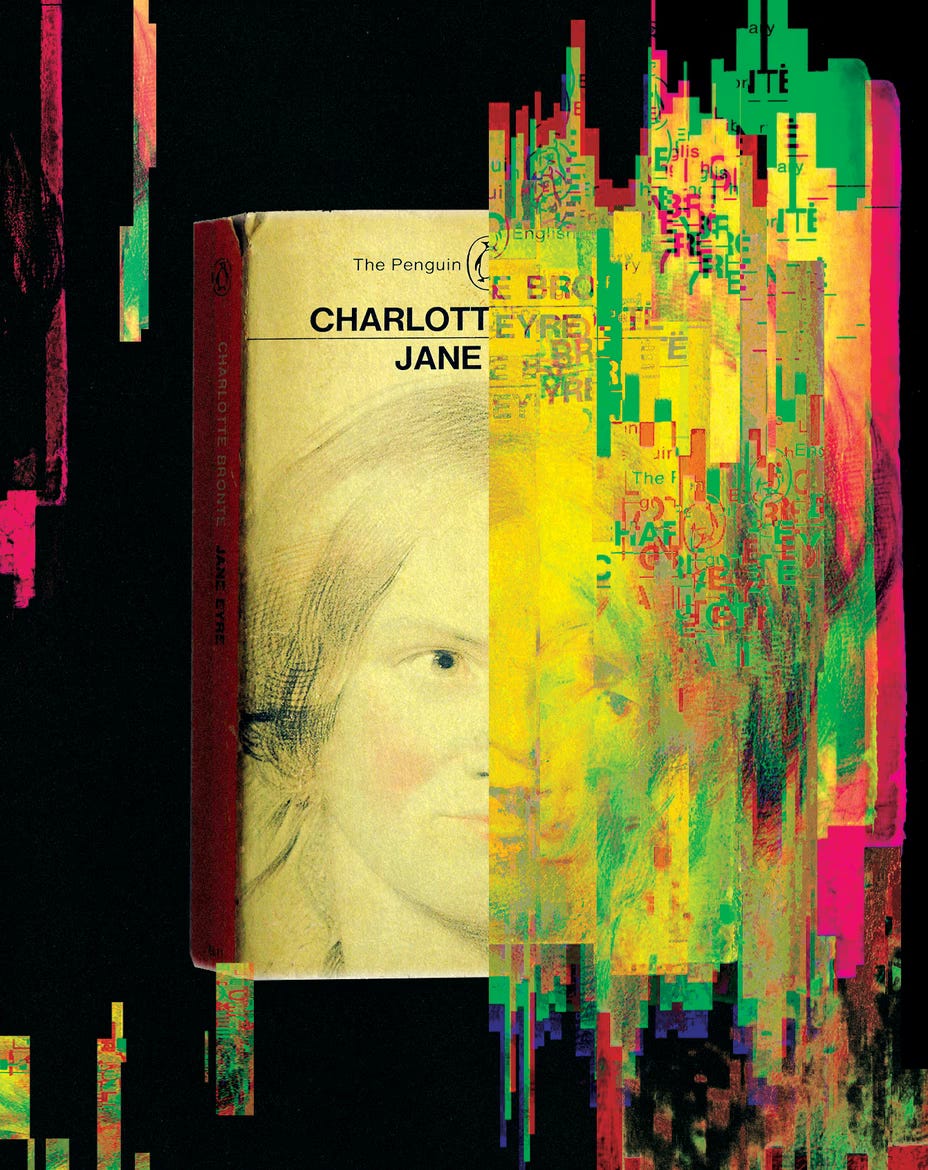
Yet, at the same time, the idea of living in a world where no one reads the classics is legitimately devastating to me. And I do genuinely believe that the less we grapple with complex texts, the less we will be able to engage in critical thinking. It scares me to think of a world where readers aren’t willing to put in any work, where anything that takes focus (or a dictionary) is abandoned, where authors must write short speedy chapters and spoon feed themes in order to sell their books.
So what do we do? How can we both hold that it is not just okay, but good, for people to simply read what they love and also worry for a society that seems poised to abandon the classics and complex texts whole cloth?
So, yes, I finished the article feeling rather despondent. I’m worried for my daughter who sees adults on their phones far more than she sees them reading. I’m worried for kids who spend far more time watching short videos than reading long books. I’m worried for English teachers who are going to get more dumped on them in an attempt to “fix” this when what they really need is more time in their days (and money in their paychecks). And I’m worried for a world that might be on the verge of shifting our definition of what it means to think and, therefore, to be human. Even if what Horowitch reports is exaggerated or far off, the potential result is, in my view, so catastrophic, it feels foolish to ignore the possibility.
But discussing with other readers is always helpful. I talked through a lot of this over voice notes with and while I didn’t leave our conversation feeling totally hopeful, she did open my mind to other questions to consider. I also heard from many people on Instagram who said they too are seeing what’s described in the article whether in their classrooms, their own children, or their peers. But a lot of people have more hope than I do at the moment. Some of them felt we’re too quick to romanticize the past when we engage in these conversations. Others feel that the passion kids who read bring to that hobby outweighs a general decline in the pastime.
Each and every one of us has a slightly different angle on this issue. We have different professions and tastes; we are different ages; we know different people. But we are all readers and bringing our observations to the table yields a lot of helpful ideas and so I’d like to open this conversation up to all of you. I’m mostly curious what you think about the decline of reading and the concept of a “postliterate” society generally, but I’m also sharing more specific questions I’ve been pondering in the last 48 hours. I would love your help making sense of this and considering where we go next.
What were your overall thoughts on the article? What did you agree with? Where do you think she missed the mark?
Do you think we are on the verge of a “postliterate” world? Why or why not?
Do you notice a difference in your own attention span and ability to read and process long, complicated books?
Have you noticed the language of books becoming simpler? What do you think about this trend? Where do you see the outliers?
Do you think it matters if collectively people largely stop reading classic literature? Why or why not?
What do you think can be done to get people reading more complex texts? I’m particularly curious what you think can be down outside of the classroom.
How do you feel about this conversation, as a reader? What makes you feel pessimistic? What makes you feel hopeful?
I can’t wait to hear what you think, readers! And if you have your own questions or additional follow-ups, please put those in the comments as well.

You may also enjoy:
For questions, comments, or suggestions, please don’t hesitate to reach out by emailing fictionmattersbooks@gmail.com or responding directly to this newsletter. I love hearing from you!
This email may contain affiliate links. If you make a purchase through the links above, I may earn a small commission at no additional cost to you.
If you enjoyed today’s newsletter, please forward it to a book-loving friend. That’s a great way to spread bookish cheer and support the newsletter!
Happy reading!