
Eclectic Recs No. 15
If you’re in my corner of the Substack universe, you’ve already read Middlemarch—or, at least seen many Notes and Newsletters from readers who are reading Middlemarch. Anna Karenina also pops up quite a bit, along with Wolf Hall (with at the readalong helm), Homer’s Odyssey, Lonesome Dove, and a sprinkle of Jane Austen make appearances in my algorithm.
I chalk up the Odyssey’s recent emergence as a Substack favorite to the new film adaptation, and I expect to see more readers picking up East of Eden, Sense and Sensibility, and Pride and Prejudice as those texts reach our screens in the coming year. Adaptations are great for classic literature—and so is conversation. I look forward to all of the readalongs, hot takes, and literary analysis essays to come AND I have a few recommendations for the next classic literature Substack trend.
These page-turners are ripe for philosophizing, book clubbing, and hot literary gossip. They are hefty enough for bragging rights, in terms of both page count and scholarly reputation. They are ready to be added to your “personal curriculum” or your audiobook queue, and I want more readers to pick them up ASAP.
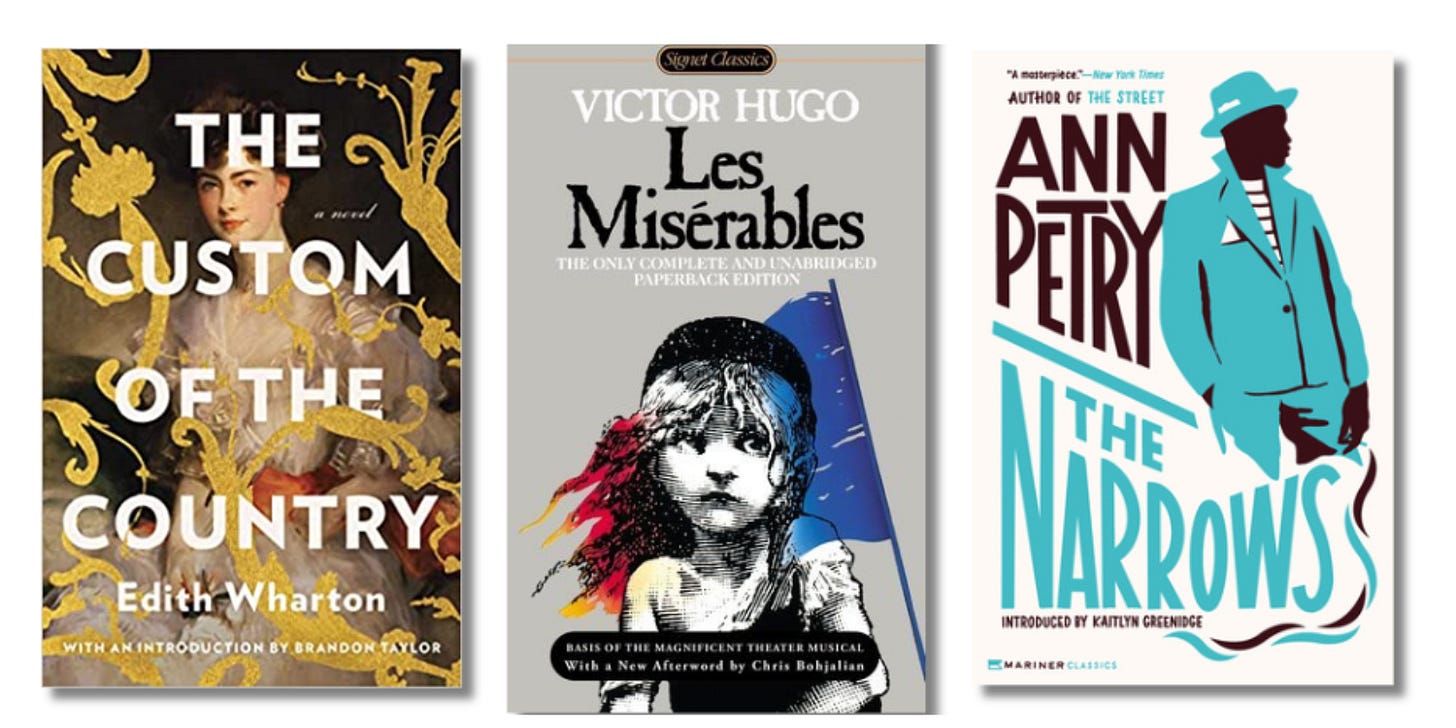
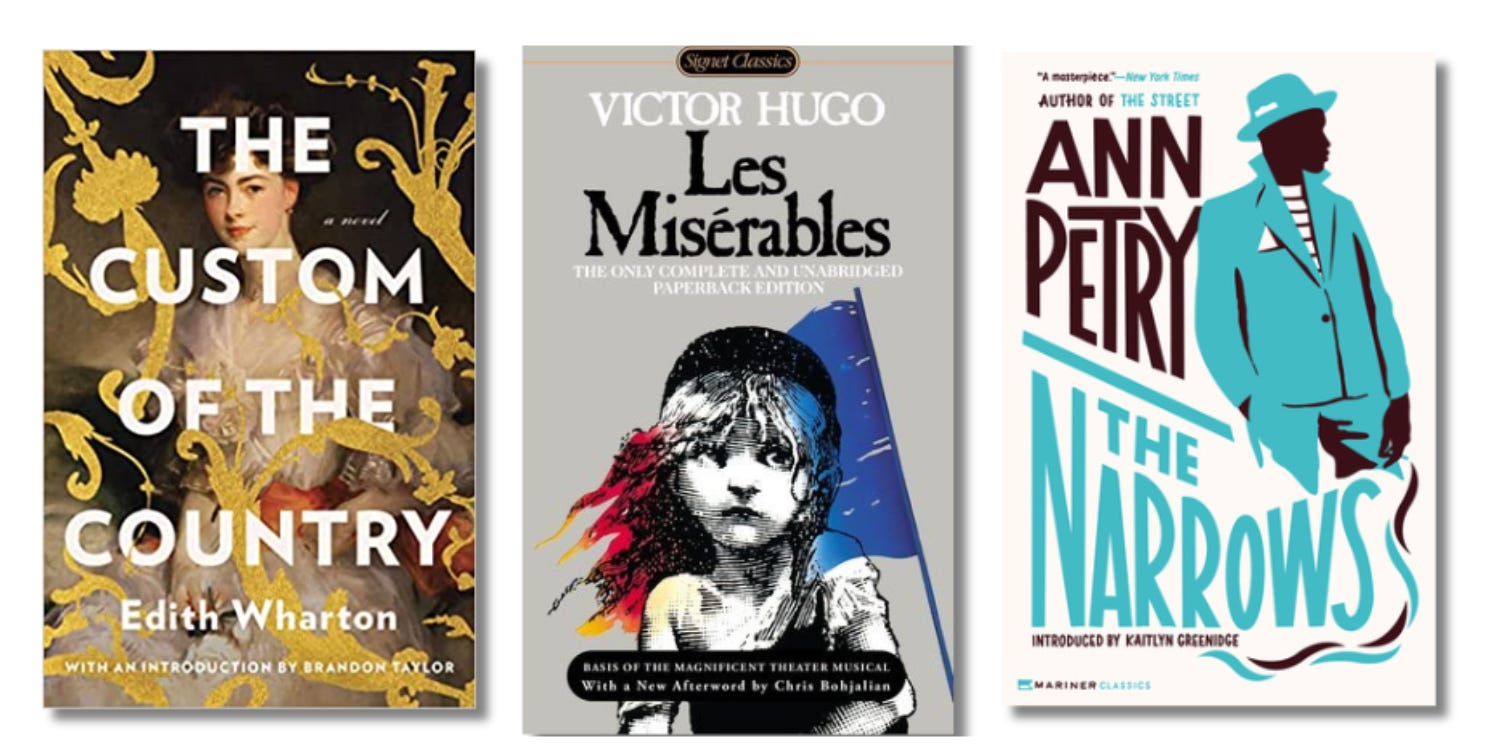
The Custom of the Country by Edith Wharton
Every time someone asks for a classic novel recommendation, I offer up The Custom of the Country. Gossipy, glamorous, and incisive, this is, in my opinion, Edith Wharton’s best social commentary and one of the most quintessentially American novels of all time. You can read it on multiple levels: a straight-up good time with unlikeable characters and lots of globe-trotting, an allegory for American colonialism and class-climbing, a cynical examination of marriage and women’s chances for mobility, or all of the above. Undine Spragg is such a discussable protagonist, and I hope tons more readers discover the book before Sydney Sweeney ruins the movie adaptation with her iPhone face/voice.
For a guided reading experience: gossip along with a Novel Pairings recap series, bundled with classes and audio content for Gilded Age context and deep theme analysis.
Les Misérables by Victor Hugo
I did not think I would like Hugo’s iconic epic-turned-musical, but it won me over right away. I couldn’t believe how much it was not a slog, despite a few difficult passages (I’m looking at you, French sewer system descriptions). This would be a great follow-up to The Odyssey or Lonesome Dove if you’re looking for another hero’s journey, but Les Misérables is also perfect for reflecting on deep questions about humanity—an experience many of us crave as short form video, AI, and a barrage of bad news throw us into existential crisis (just me?). Reading such a chunky novel feels like a feat these days, so conquer your attention span with Hugo’s world of class struggles, politics, love, loss, and vengeance.
For a guided reading experience: grab a much-needed bundle of recap episodes and literary analysis to help you through the touch chapters and keep every character straight, from Novel Pairings.
The Narrows by Ann Petry
I came for Ann Petry’s influence on writers like the incredible Tayari Jones. I stayed for her remarkable psychological insights. Her novels, which read like 1940s noir films, feature characters whose inner and outer lives play tug-of-war with each other. Around this inner turmoil lies social commentary on race, class, community, and the rural vs urban debate. Petry’s novels make excellent book club selections because they are ripe for debate and filled with complicated characters—and, most importantly, wrap up in highly discussable endings. The Narrows takes place in a small East Coast town where characters grapple with the racial divide, personal desires, and self knowledge.
For a guided reading experience: check out my Anchor Text series, now archived and ready for more readers.
Honorable mentions from my TBR
Jubilee by Margaret Walker
North and South by Elizabeth Gaskell
What chunky classic would you like to see splashed across Substack this year?





