
June Reads
The introduction to this letter is going to be deeply earnest because today marks three years since I started Martha’s Monthly. It’s strange to think that the newsletter was born out of complete boredom with no real direction, and has turned into the beating heart of my life (literally). I don’t know who I would be without it. It has shaped my life in a way I couldn’t have foreseen but am so endlessly grateful for.
Long time readers will know this because I have said it before, but this newsletter, and all the work, ideas and relationships that have come with it, have given me a sense of self I never thought I’d see again. After being so unwell for so long I was a shell of a person with truly no interests or ambition. Writing Martha’s Monthly, connecting with my readers, being commissioned for my writing, conducting interviews with incredibly interesting people and launching the book club have been the most gratifying, stimulating and affirming experiences. Without it I would not have gained the deep understanding I have of who I am, where my skills lie and what I want out of a professional and creative life.
Thank you, truly, for being here and accompanying me in my reading life. It is an honour and a joy to write for you all, that can sometimes be hard work, but I love it endlessly. Writing this is making me cry because it is so emotional to think back to the lifeless, depressed and scared version of me who started Martha’s Monthly three years ago. I wish I could tell her all that the newsletter, and our sense of self, would become. One day I will write a book about what I went through in not being believed, despite being so deathly unwell, because it is important. Until then, know that I would not be where I am at all without your readership, and I am eternally grateful for it. Thank you, from the bottom of my heart, for your companionship, support, friendship and book recommendations.
An extra special thank you to those of you who financially support this newsletter. I am even more grateful because you have made so much more possible. Thank you thank you thank you. <3 If this has moved you and you would like to financially support the newsletter, you can do so here.
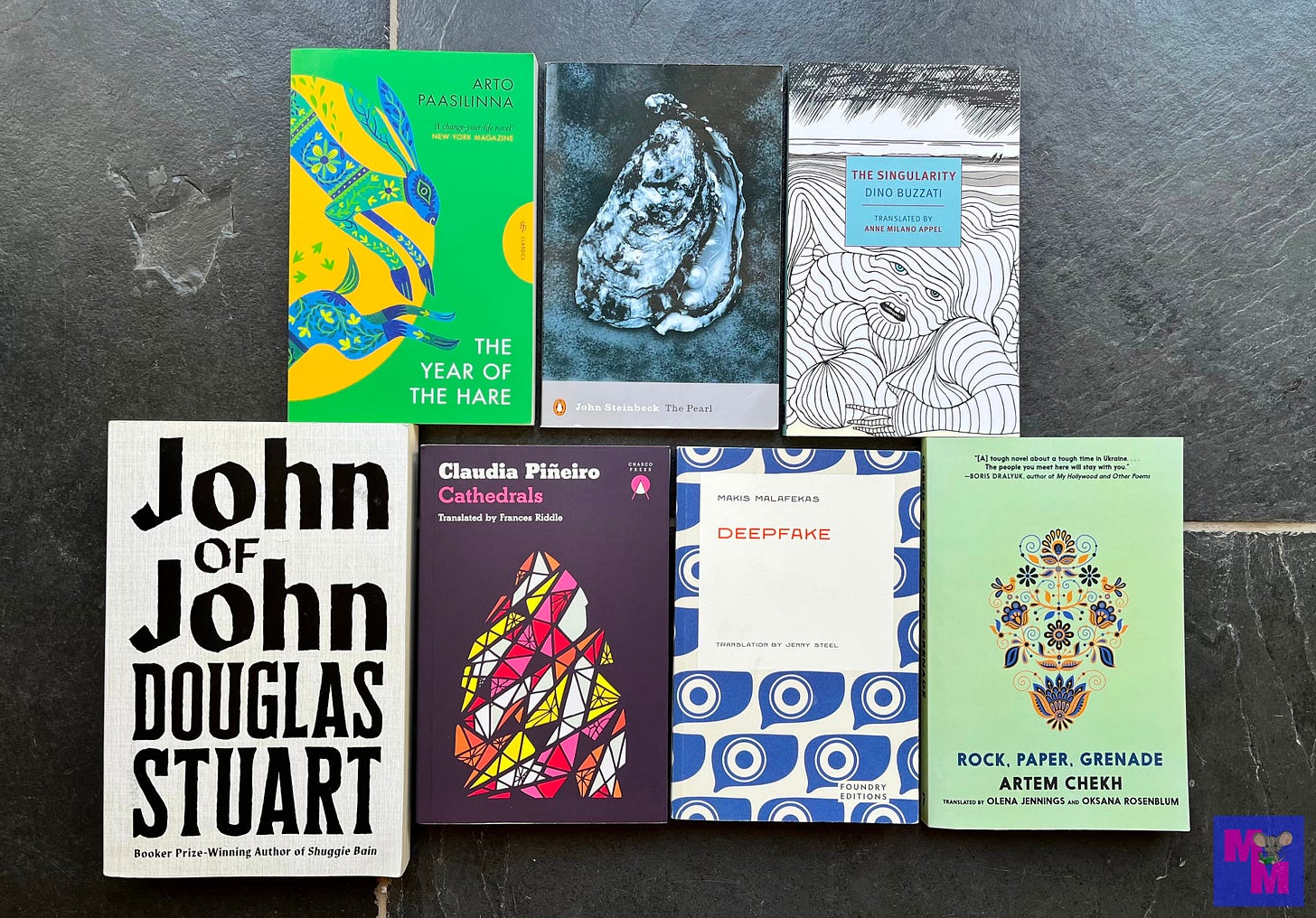
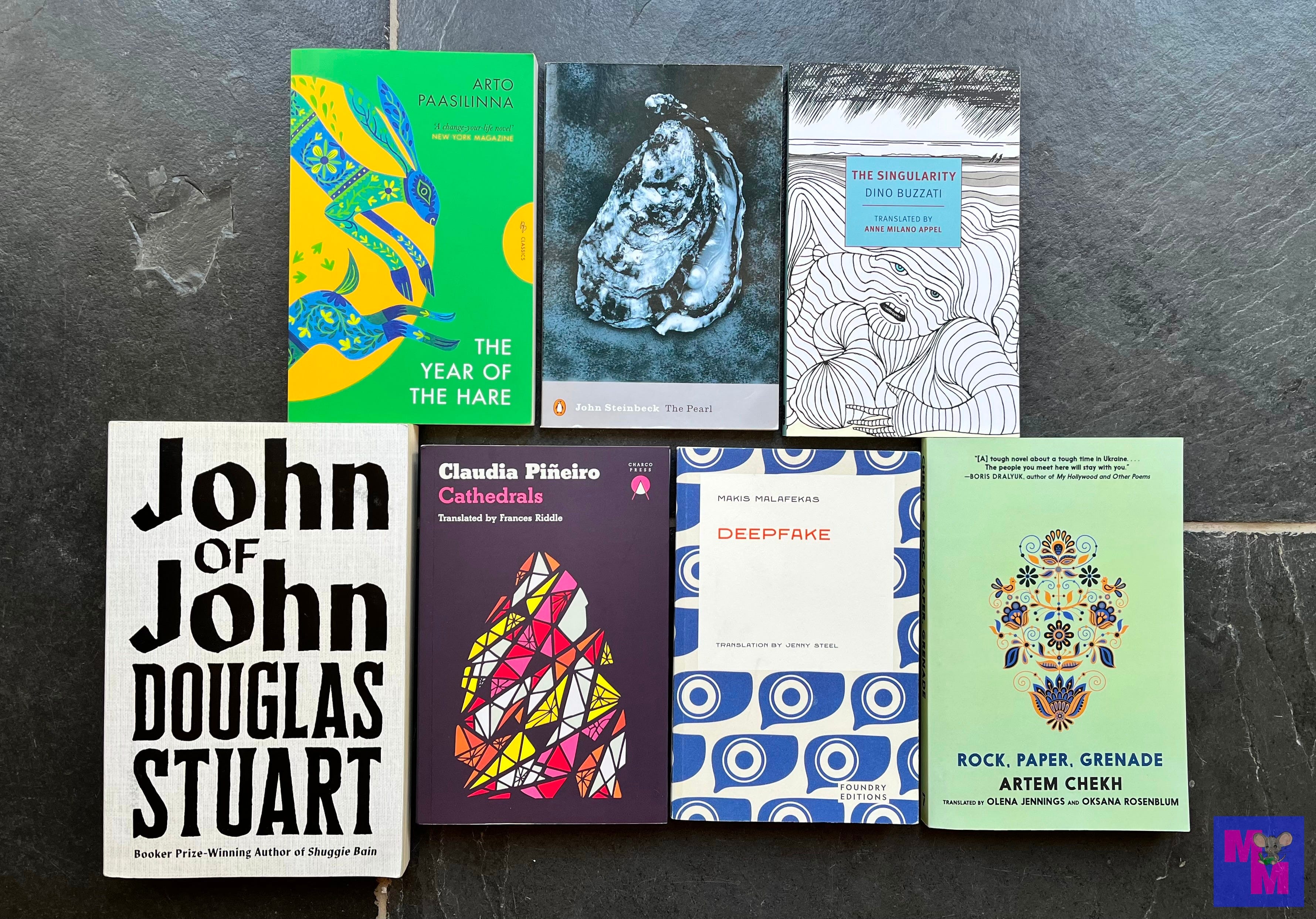
Now, let’s move onto the books who were a mixed, but interesting, group this month.
To see the translated reads from June on Martha’s Map, including authors from Ukraine, Argentina, Italy, Greece and Finland, click here.
For those who are new, buy, borrow, bust is my recommendation key: Buy = I loved this book and highly recommend it. Borrow = I liked this book and think it is worth a read. Bust = I wouldn’t recommend this book from my reading experience.
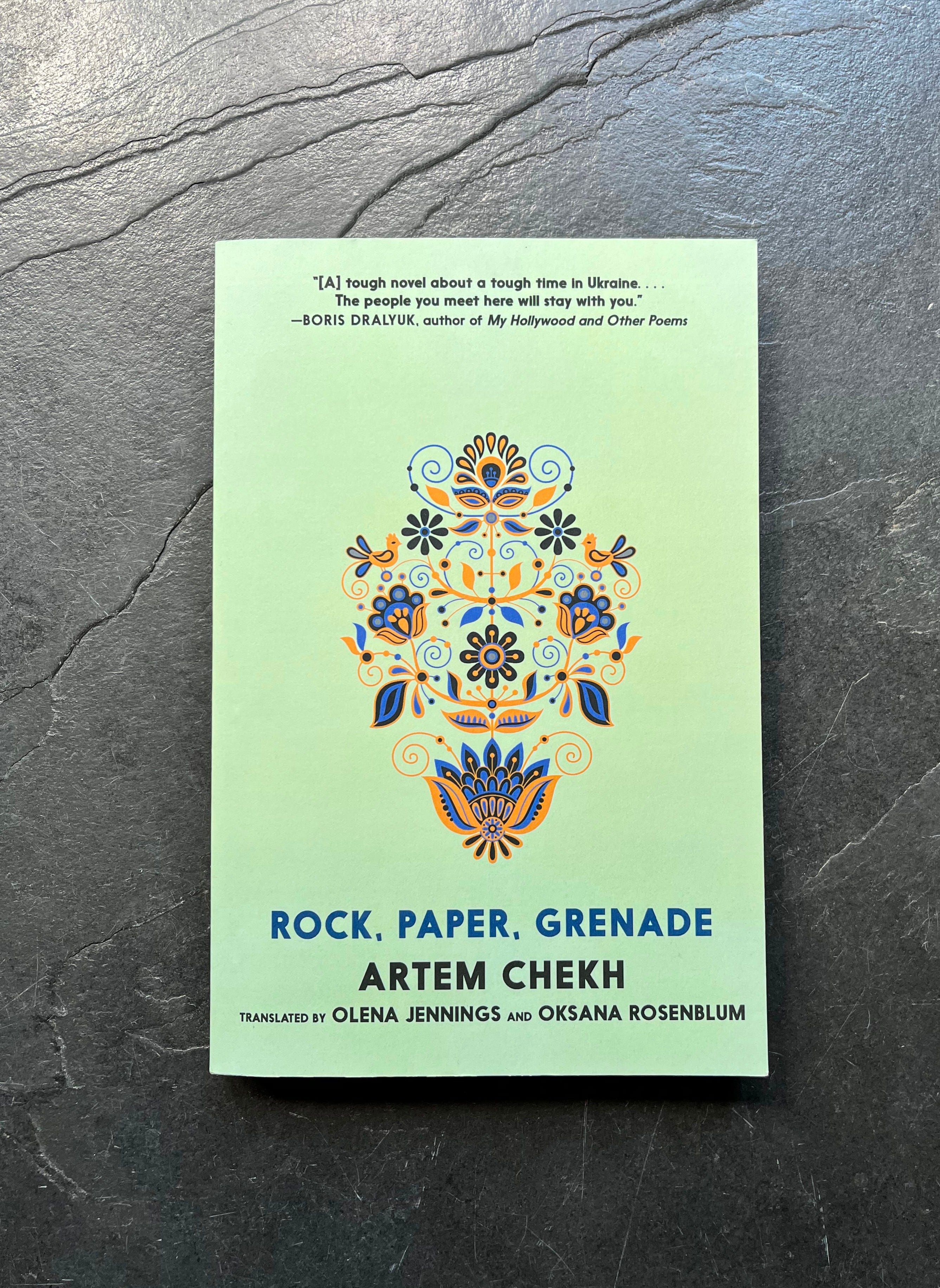
‘Rock, Paper, Grenade’ by Artem Chekh (translated by Olena Jennings and Oksana Rosenblum)
In 1992, when Tymofiy was five years old, his family in Cherkasay, Ukraine grew by one; the arrival of his grandmother’s boyfriend, Felix. Felix is haunted by his memories of fighting in the Soviet-Afghan war. He screams in the depths of his drunken rage and is riddled with PTSD. His confusion speaks to a much larger identity crisis that is happening for him, Tymofiy, the whole family and the entirety of Ukraine in the wake of their newfound independence. We follow Tymofiy as he grows up, drifting around the streets of his town, uncertain about who he is and who he might become. Surrounded by generations imbued by wartime trauma, a sense of hopelessness and loss pervades Tymofiy’s childhood, and he wonders if it is even possible to have a future, let alone crave a better one.
Rock, Paper, Grenade is a beautiful, harrowing depiction of life in 90s Ukraine. Chekh uses an intergenerational portrait of a family to depict the socioeconomic challenges of the time, and articulate how pervasive suffering was throughout the twentieth century. Tymofiy’s parents, Olha and Lyosha, and his grandmother, Lida, all have their own incredibly complicated relationships with Ukraine as an identity, and as a country. Felix is perhaps the only adult who ever speaks to Tymofiy with any degree of honesty about the conflicts that characterise the country’s past, and gives language to the hardship that is so clearly all around him. Though an incredibly tumultuous and chaotic presence, at times Felix becomes the most consistent adult that is in Tymofiy’s life. While Rock, Paper, Grenade is a coming of age tale about Tymofiy, it is equally about the coming of age of a nation, and all its inhabitants. It is a real ‘psychology of a nation’ novel that explores the wounds of war and how they permeate every single aspect of life.
As he grows up, Tymofiy begins to gain awareness of how poor they are. We watch a bright eyed little boy turn into an incredibly apathetic, depressed adolescent who starts to lose his hair because of malnutrition. The tragedy that Chekh weaves into the novel so seamlessly is absolutely devastating, poetically delivering some of the most harrowing lines in relation to Tymofiy’s disinterest in being alive; ‘Tymofiy dropped out of childhood without noticing it, as if it were a dream’ and ‘Why bother crying? He did not want to live’. Behind these absolutely gut wrenching prose is an accurate depiction of a truly exhausted and depleted Ukrainian society. Tymofiy’s mother and father are lifeless, constantly fighting with the struggle to try and put food on the table, to make money in any way they can and just survive. Having to watch Tymofiy misunderstand some of their circumstances as a lack of love, or disinterest in his existence, is truly crushing.
This was our pick for book club in June, and it was universally liked across the board, which is the first that’s happened! I loved this book for Chekh’s beautiful prose, harrowing storytelling and everything that it taught me about Ukraine. Yasmina, a lovely book club member who is Ukranian, confirmed to us that the book was incredibly accurate in its portrayal of Ukraine, and that confirmation cemented my admiration for Chekh further. To be able to create such a vivid portrait of a nation through the precarious domesticity of a family unit, with each generation embodying its own uniquely devastating relationship with Ukraine as an identity, and home, is incredibly impressive.
Rock, Paper, Grenade is a transportive, eloquent novel that is important to read. To think that there will be new generations of Tymofiy’s and Felix’s in Ukraine now, living in such immense social and economic instability because of Russia’s invasion, is crushing. I would recommend it to those who like to learn from their fiction and call it a buy! I loved it and finished it with big tears in my eyes. I felt so moved by it and am sending all my love to the Ukrainians reading this newsletter, as always.
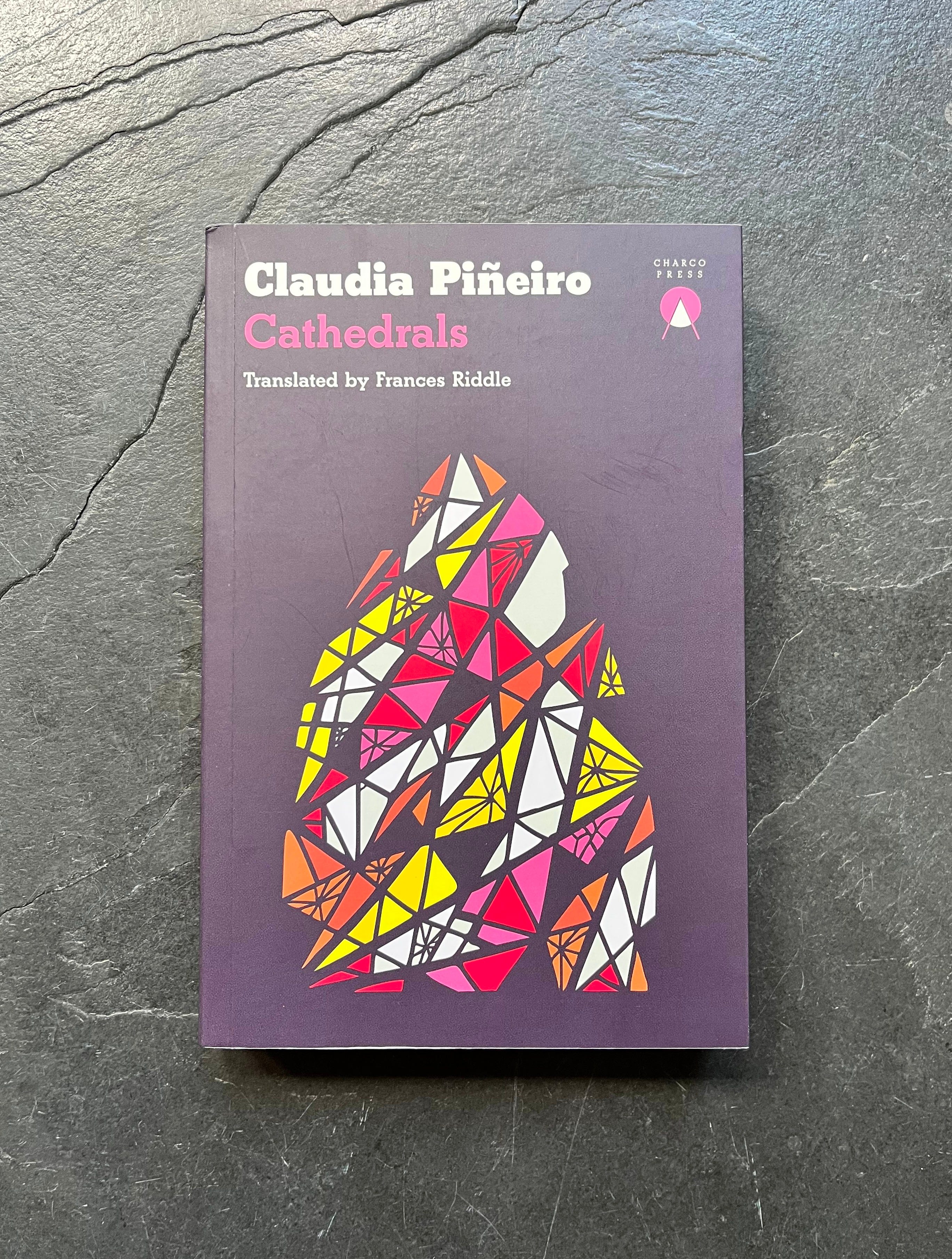
‘Cathedrals’ by Claudia Piñeiro (translated by Frances Riddle)
In a quiet, middle class neighbourhood in Buenos Aries, the body of teenage Ana is found dismembered and burned. Thirty years later, her family still live in the aftermath; Lía, the middle sister, is estranged from her family, Carmen, the older sister, is intoxicated in religious fervour, and their father is widowed, still relentlessly searching for answers. Enraged in the aftermath of Ana’s death, Lía moved to Spain and is now a bookshop owner. She vowed to never speak to her family again until Ana’s killer was found. This vow has not yet been broken.
Cathedrals is another intoxicatingly propulsive thriller from Piñerio, which is her specialty. How she builds and paces a narrative is intoxicatingly brilliant, and continues to be one of her most impressive skills as a writer. Planted within her engrossing, absorbing stories often lies a fiercely discerning indictment towards the structures that shape our societies. In Cathedral, Piñerio reserves her razor sharp scrutiny towards one of the oldest, most corrupt institutions; the church. Cathedrals is an incisive look at how toxic religion can be and how it can be wielded to silence and coerce people. Piñerio is damning of the insidious culture that religion can foster. But in her critique of the church’s rotten presence in the community, Piñerio defiantly suggests that there is always hope to be found in rejecting the dominance that institutions have, and understanding how they came to acquire so much power.
Though the interrogation of religion takes centre stage, Cathedral also offers sociopolitical commentary on Argentina’s fresh post-dictatorship society, where gender violence is incredibly normalised and the bible being weaponised to instil fear in society. The religious fervour of some characters is nauseating, and to watch them justify the depraved treatment of women ‘god’s plan’ is horrific. Yet this attitude is consistently countered by Piñerio, who incisively articulates that the Catholic church’s teachings ‘do not stand up to the credibility we demand from any work of fiction’. There is immense nuance in Cathedral about how women are regarded domestically and societally, and the role the church plays in perpetuating that. She condemns the church with a fervour that might be uncomfortable for some, but it is with grace she articulates that it is close minded devotion, detached from humanity, and how religious institutions give these individuals so much influence, that is so abhorrent.
‘Maybe faith is just another white lie in a life held together by white lies’ 1
Piñerio’s ability to deftly inhabit the worlds of such vastly different characters, making each so vividly convincing, and distinct, is extraordinary. She always anchors her storytelling in the power of truth, with her social commentary consistently suggesting that there is hope to be found in the darkest of places - which is a message that I often appreciate. I tend to finish a Piñerio novel in floods of tears, and this was no less. I inhaled this book and would recommend it to any reader who enjoys being swept away by emotions and a ‘whodunnit’ with a lot of heart! This is an undeniable buy.
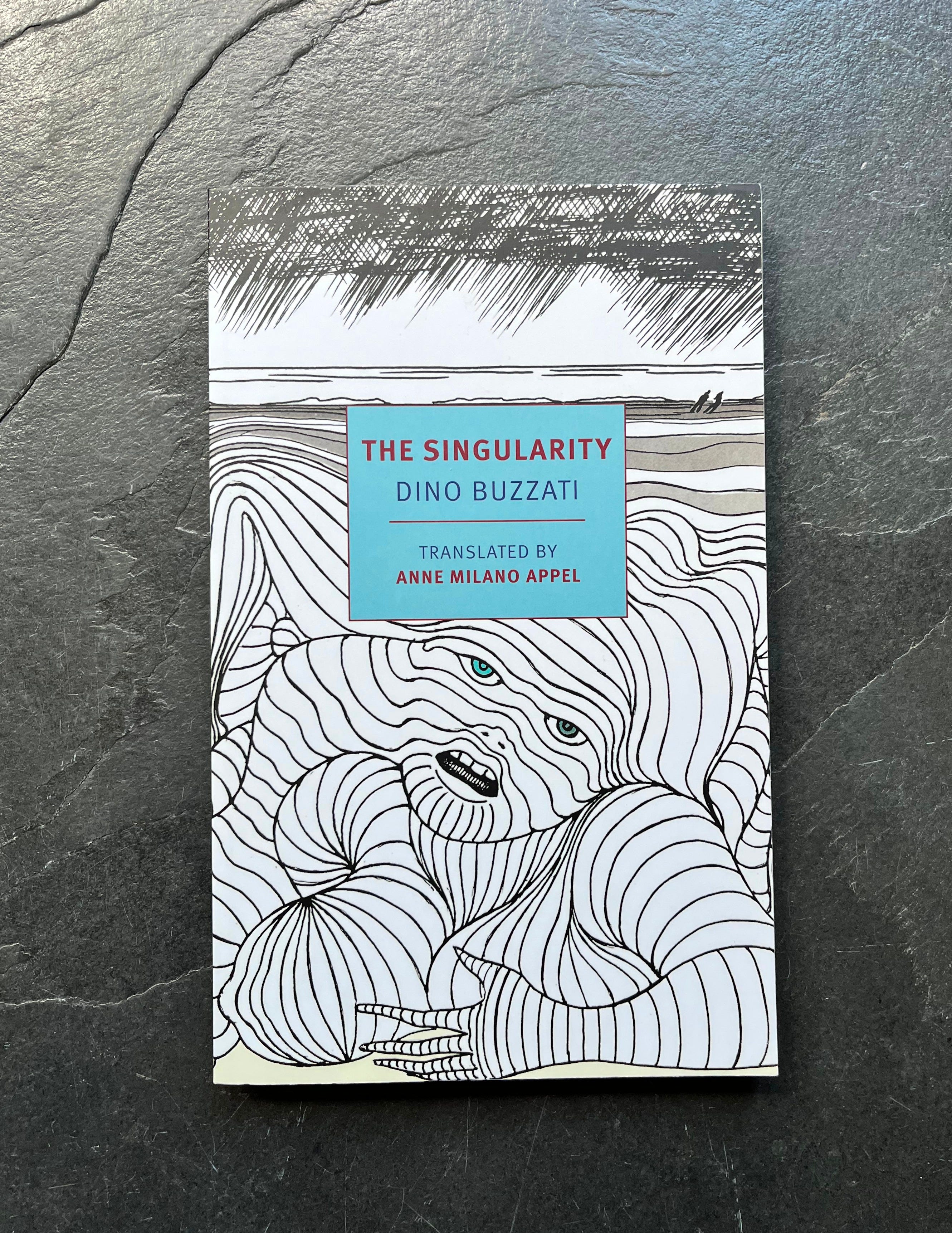
‘The Singularity’ by Dino Buzzati (translated by Anne Milano Appel)
Ermanno Ismani is a university professor who is very suddenly, and suspiciously, summoned by the Ministry of Defence to work on a top secret mission at a mysterious research centre. He is forbidden to know what he is supposed to do there or how long the job will last for. Despite this, Ismani takes the job and is accompanied by his wife, Elisa, and heads to the Experimental Camp of military zone 36 isolated from the world, nestled among plunging cliffs and high mountains. Yet even when he arrives, it remains unclear as to what Ismani is meant to be doing, and the research they’re conducting is. While those around him continue to be vague, Ismani observes a shining white wall and behind it wires, radio towers and mobile sensors. Faced with this amorphous technology, it begs the question as to whether the high security around the research is because of the danger that it poses to the world, or perhaps the danger we pose to it.
Originally published in 1960 it is deeply entertaining, and unnerving, to read such a prescient science fiction novel about artificial intelligence. Buzzati presents a radically perceptive, foresighted novel that explores the mortality of computers gaining sentience, and how what we choose to ‘build’ says about us as individuals. It is impossible to not be enchantingly enamoured by the concept Buzzati explores as a modern day reader. He explores a moral dilemma about artificial intelligence that seems to have been almost entirely overshadowed by the ever evolving environmental and economic threat that it poses today. Buzzati was a thinker from a time when the exploration of artificial intelligence was perhaps more freeing; rooted in a more moral and philosophical dilemma of technological development, rather than the fear, and incomprehensible amounts of money, that dominate the topic today.
The Singularity is a cautionary tale that reminds us of the political and ethical dilemma of trying to capture something which is so intangible, the human soul, and attempt to contain it in something mechanically physical. Regardless of the endless comparisons that explore how ‘right’ Buzzati was as a fantasist, the fact remains that the prose is not as engaging as the concept. Often spare in its description and slightly shallow in its contextual exploration of some of its characters, The Singularity is characterised by its brevity. While this brevity occasionally creates room to ruminate on the mystery Buzzati has created, it ultimately designs a sparse story, one which aches for more. Though Buzzati’s prose are effectively eerie and ominous, there lacks an overall emotional centre to root the story into, leaving it slightly suspended.
Despite Buzzati’s best efforts to interrogate something so incomprehensibly outrageous, the novel is slightly timid in its exploration. However, within the limitless hunger of the human ego that the story does capture, Buzzati poetically wonders why our mortal lives, and bodies, are not enough. And in the age of language models dominating the cultural discussion, and posing an immense economic threat, the uneasy message of The Singularity rings true again; why is the beauty and capability found within the unique human form not enough?
The philosophical tone of this novel is more appealing than the novel itself. It is an interesting story, and while I didn’t feel drawn to reach for it, I enjoyed being reminded of the anxiety that used to characterise discussions about futuristic technological developments. I also loved how surprisingly queer it was. Some have perhaps become desensitised to the horror of robots becoming sentient beings, instead of just how much water they consume and the art that they steal, and I think we need to bring it back. I would call this a borrow.
‘John of John’ by Douglas Stuart
To appropriately set the tone of this review, I need to state I am historically a big Stuart fan, adoring both Shuggie Bain and Young Mungo. However, I loved these books long before I started writing the newsletter, when I grew into a more critical reader. Thus, while incredibly excited for John of John, I would be lying if I said I was worried that I wouldn’t like it because my reading standards had changed. While this is true, I also think Stuart has changed as a writer. Namely, that he is seemingly not as strong as he used to be.
John-Calum Macleod, known as Cal, has just finished art university in Glasgow and is utterly broke. He is requested to come back home to the island of Harris by his father, John, and with little emotional or fiscal capacity to refuse, Cal goes back home. There, he finds life stagnanting just as he left it. His feisty maternal grandmother, Ella, and his devout church attendee and sheep farmer father still collide and begrudgingly cohabit in their small croft.
Cal is gay, something he has always known but will never discuss that with his religiously devout father. The same goes for his father; John is gay, but feels such immense shame about it he will never tell his son. Ella knows all of this, and exists in the chasm of deception that lies between them. John hides his sexuality by being overly invested in the Presbyterian church, often demanding Cal to repent to ‘save’ himself. Cal returning home brings all the emotional inability for father and son to connect with each other back to the surface, within a community that is insular and deeply entangled.
John of John is thematically the same as his previous two novels, centred around young, gay working class boys in Scotland. At a glance, all that seemingly separates them is the age of the protagonist, aging slightly within each book. It seems that Stuart’s ability to write is getting swallowed up by his over reliance on these themes. While his earlier novels were emotionally resonant, heartbreaking tales that were conceptually strong with seamlessly developed storytelling, John of John is in every way the opposite. Stuart is trading tragedy for a developed plot, neglecting the art of characterisation and using the socioeconomic ‘tropes’ of Cal’s life to propel the story instead.
Stuart’s dependence on using socioeconomic tragedy and hardship to create an emotionally resonant novel brings into question why he uses them. I am aware that these themes do overlap with his personal life, and this is evidently where he is drawing inspiration from. But gay, Scottish, working class boys are not a monolith, but Stuart’s novels are beginning to imply they might be. Cal is marred by Stuart’s overreliance on these tropes which are increasingly beginning to look like a crutch, rather than a tool for nuanced and complex exploration. Stuart’s books are known for their tragedy; they are often gut wrenching and hard to read in their unflinching honesty. But crucially, this time, there was no depth to bring these themes to life, to interrogate them beyond what I would suggest are stereotypical aspects. John of John suffers from a true lack of imagination in storytelling. The emotionally resonant, poetic prose that have made Stuart’s previous tragedies more buoyant and enthralling are nowhere to be seen here; instead, a reserved, lacklustre tale stands in its place.
This book is not terrible, but it’s not that good either. I kept turning the page, waiting for the prose we associate with Stuart, only for it to never come. The plot holes in this story are glaring, characters straw versions of what they could have been. John is by far the most dynamic character, but is barely emotionally interrogated or explored by Stuart. Despite being designed with an enormous amount of complex contradiction, Stuart leans into sensationalism and melodrama as an attempt to flesh him out. The writing is so incredibly lazy, it’s hard to believe it was actually a Stuart novel. There is a hesitation and restraint in Stuart’s voice in John of John that reads like a lack of confidence in his own story - and it shows.
What I did like was Ella’s characterisation, which was rich and expansive. She shines among the men who Stuart hangs out to dry in comparison. This book was easy to read, but easy doesn’t translate to well done. Stuart’s exploration of the repeatedly suffocating nature of poor, country living was the best aspect of the novel. The idea of the safety we can find in being stuck, and feeling fearful in initiating any change, is Stuart’s thread throughout the novel. The conflict of manhood, pride and tradition oscillate among the croft, creating an environment where engaging even with the idea of a future becomes difficult to bear. It is in these beautiful moments that we saw glimpses of what could have been.
I spent a considerable amount of time wondering how my relationship to this book might have been different if I wasn’t such a Stuart devotee. Perhaps I am more forgiving of his shortfalls here because I know he can write exceptionally well. But equally, it is with this prior knowledge that makes me so disappointed with John of John. I would call this a borrow. I desperately hope Stuart’s next novel tries something new and within that, he manages to rediscover his skill in storytelling.
I will be interested to hear what the rest of you who have read John of John think about it! Permission to disagree with me is granted, always.
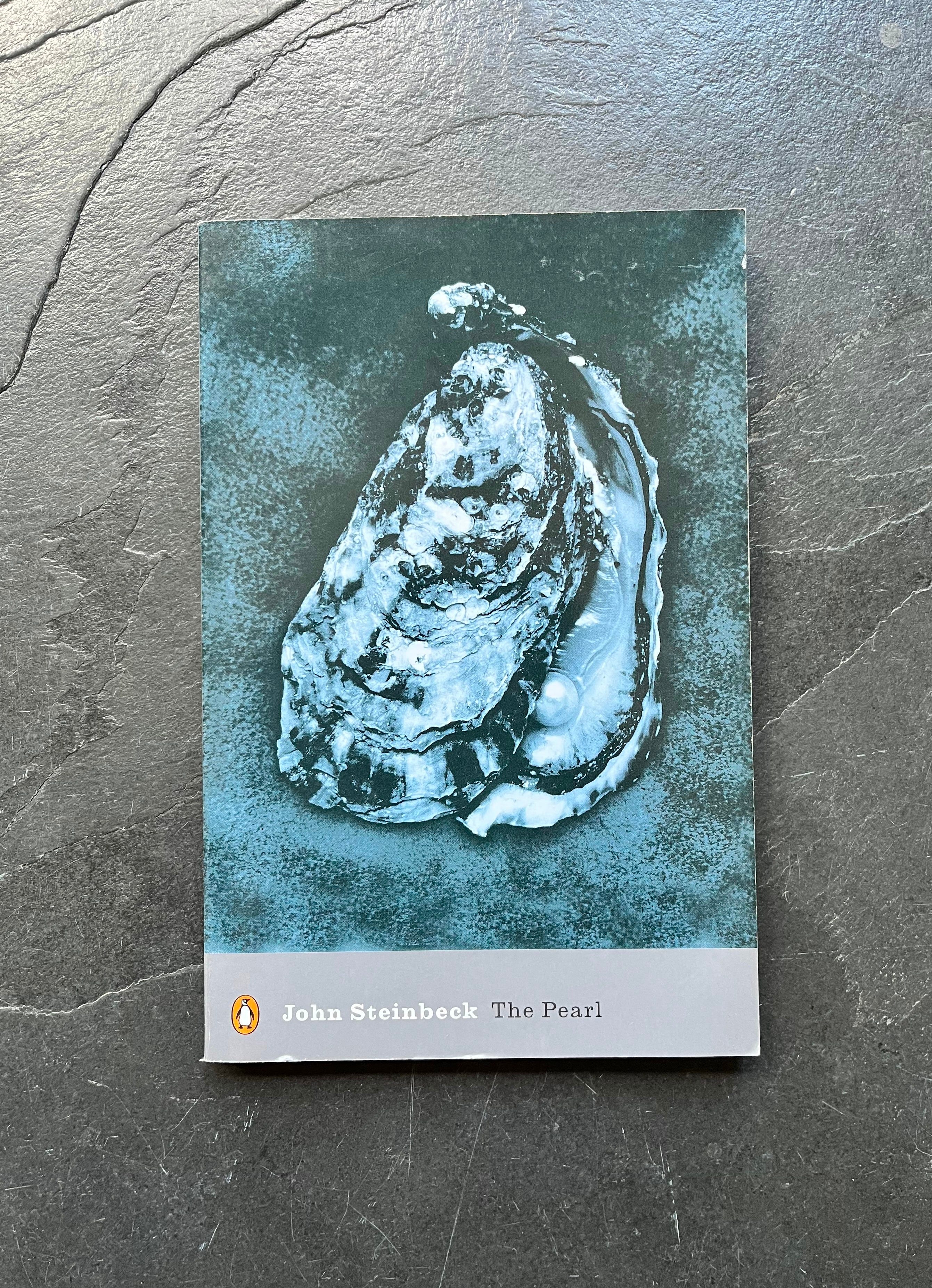
‘The Pearl’ by John Steinbeck
The Pearl is a parable about wealth and the evil it can bring. Kino, a Mexican pearl-diver finds ‘the Pearl of the world’; and he believes that with it, his life will be magically transformed. He dreams of marrying his wife Juana in the church and sending their son Coyotito to school. Obsessed with the great hope of this pearl, Kino becomes blind to his greed, and it arouses fear and violence in his neighbours, and himself.
Last summer I read, and adored, The Grapes of Wrath. I learnt that after publication, Steinbeck received immense attention for the novel, making him the target for hate mail, FBI scrutiny and ultimately immense commercial success. The extremities of this prompted years of reflection for Steinbeck, particularly on the obsession of wealth and fame. And thus, The Pearl was born. I read this as a companion piece to the concepts explored within The Grapes of Wrath. It is compelling that after his most commercially successful, and compassionately humane novel, Steinbeck felt compelled to assess the tenuous ‘American dream’, the corruption of wealth and the principles of a good life.
The Pearl is a fictional window into Steinbeck’s psyche, one which evidently felt overwhelmed and confused by the attention his writing was garnering. Kino is so obsessed with protecting the pearl, the key to his future, so intently that he becomes selfish and violent. He dramatically changes from an attentive husband and father to an individual haunted by the prospect of wealth. The knock on effect this has on his community is poignant, and asks the questions about what money does our sense of self and treatment of others. The urgent hope Kino feels towards the promise of the pearl results in him not hearing the warnings from Juana, who is bearing close witness to his desperate greed. While in The Grapes of Wrath Steinbeck suggests that difference creates unnecessary division, The Pearl takes this one step further, shifting the value from great material wealth into an objectification of evil.
The Pearl is a thought provoking exercise thinking about how we construct society, condemn others and weaponise differences. I wouldn’t recommend this as a standalone novel, rather one to be read after The Grapes of Wrath for its continued exploration of division in society. Steinbeck’s prose remains mostly strong, becoming marginally bloated at the end, but ultimately creating a compelling tale of hopes, dreams and agency. Steinbeck himself described it as ‘a brutal story but with flashes of beauty I think’ and I can’t help but agree. I would call this novella a borrow! I am unsure what Steinbeck to read next, does anyone have any recommendations? (I have read East of Eden, before anyone suggests that!)
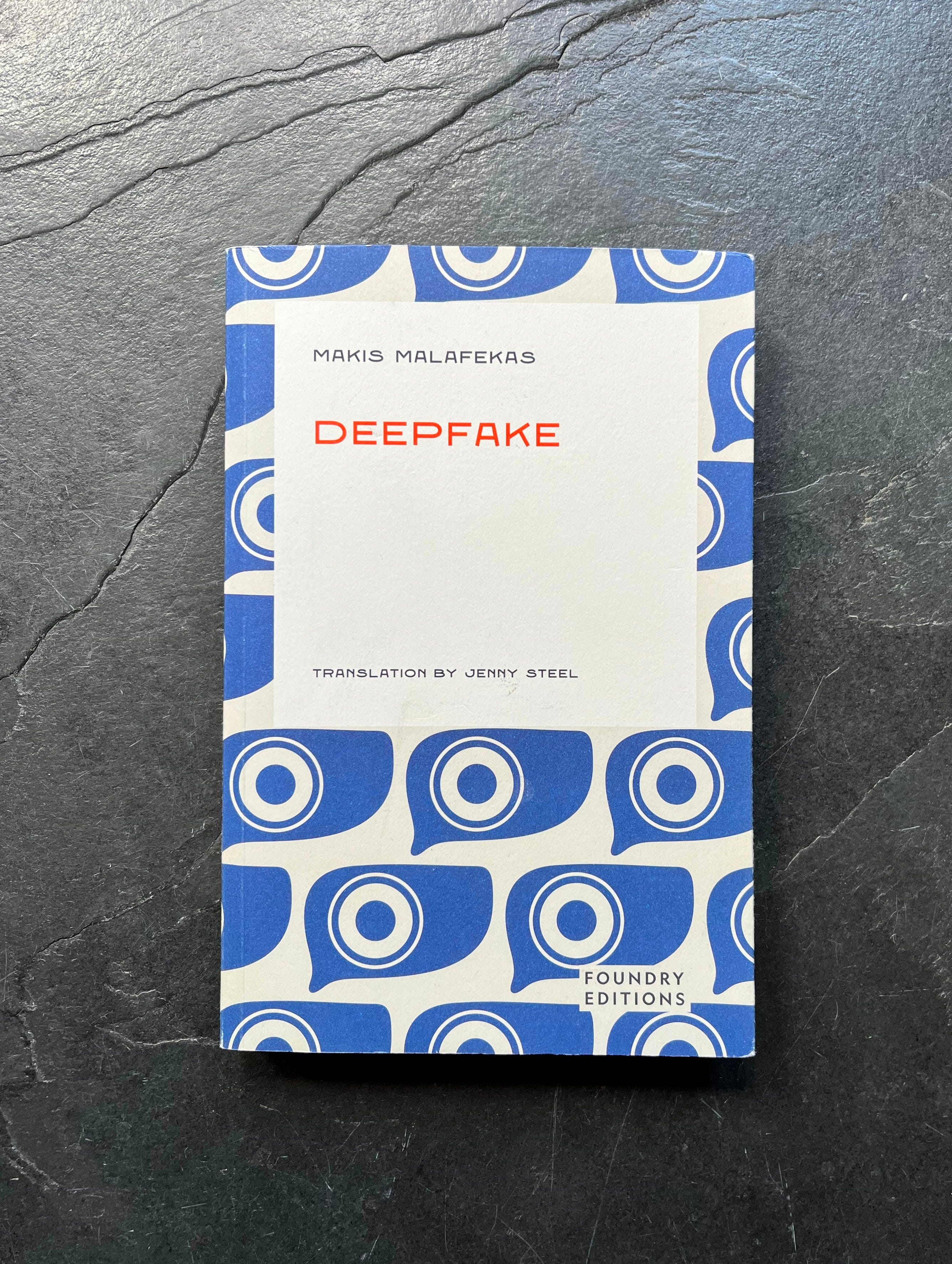
‘Deepfake’ by Makis Malafekas (translated by Jenny Steel)
Michalis Krokos is an uninspired writer and wandering resident of Athens. He is chronically obsessed with the Johnny Depp trial, but a visit from a mysterious prosecutor informing him that his friend, Rebecca, is in trouble forces him out of his apathy. Krokos agrees to go undercover as a fake news copywriter inside a violent far-right group, New Hellenic Identity Team (NHIT) to uncover the dirt they have on Rebecca. But what begins as a selfless rescue mission spirals into a bizarre blackmail plot and political paranoia.
Truthfully, I have no idea how to execute this review. Deepfake is a novel with too much going on, with a sprawling plot that can’t quite contain itself in the 250 page scope Malafekas grants it. What begins as a tale that is conceptually easy to follow spirals into an untidy narrative of Krokos becoming increasingly embroiled with far right extremists. Malafeka’s prose are scant, with explanations of events becoming increasingly insufficient. But despite all this criticism of how the author chose to build the story, the narrative has an undeniable adrenaline about it, which is ultimately what stopped me from giving up.
Books like Deepfake, where I feel extremely passive about them, are the only times I wish I had never made the commitment to review every book I read. Even as I finished Deepfake I struggled to come up with any commentary for it. Perhaps the most illuminating aspect of the novel was the translator note by Steel. She reflects on how the book is representing the post 2010 economic crisis in Greece with empty developments across the city and the gentrification of communities for tourists. But my interest in the translator’s note, over the novel, just cements where my taste lies. Deepfake is commercial in its surface level comedic noir, focusing on the nonsensical drama Krokos is involved in, rather than any depth of understanding the socioeconomic atmosphere of Greece that characterises the background of this absurd instability. I would have liked an exploration of the absurd instability, but that is ultimately wanting a different book. I would have traded the pace for depth, a little less adrenaline for a more coherent portrait of Athens, or Krokos as an individual.
I didn’t hate this, I enjoyed returning to it to see what would happen, only to be cursed with the news that it is part of a series. It is doubtful I will return to this. The concept of this novel is interesting, but the execution isn’t very enamouring. Dramatically, I would call this a bust because while I had a good time, I cannot with any clarity describe this book. Thus, I can’t possibly recommend it. This is a hard bust to declare because I like Foundry Editions a lot. Alas, not everything can be for everyone, and this was not for me.
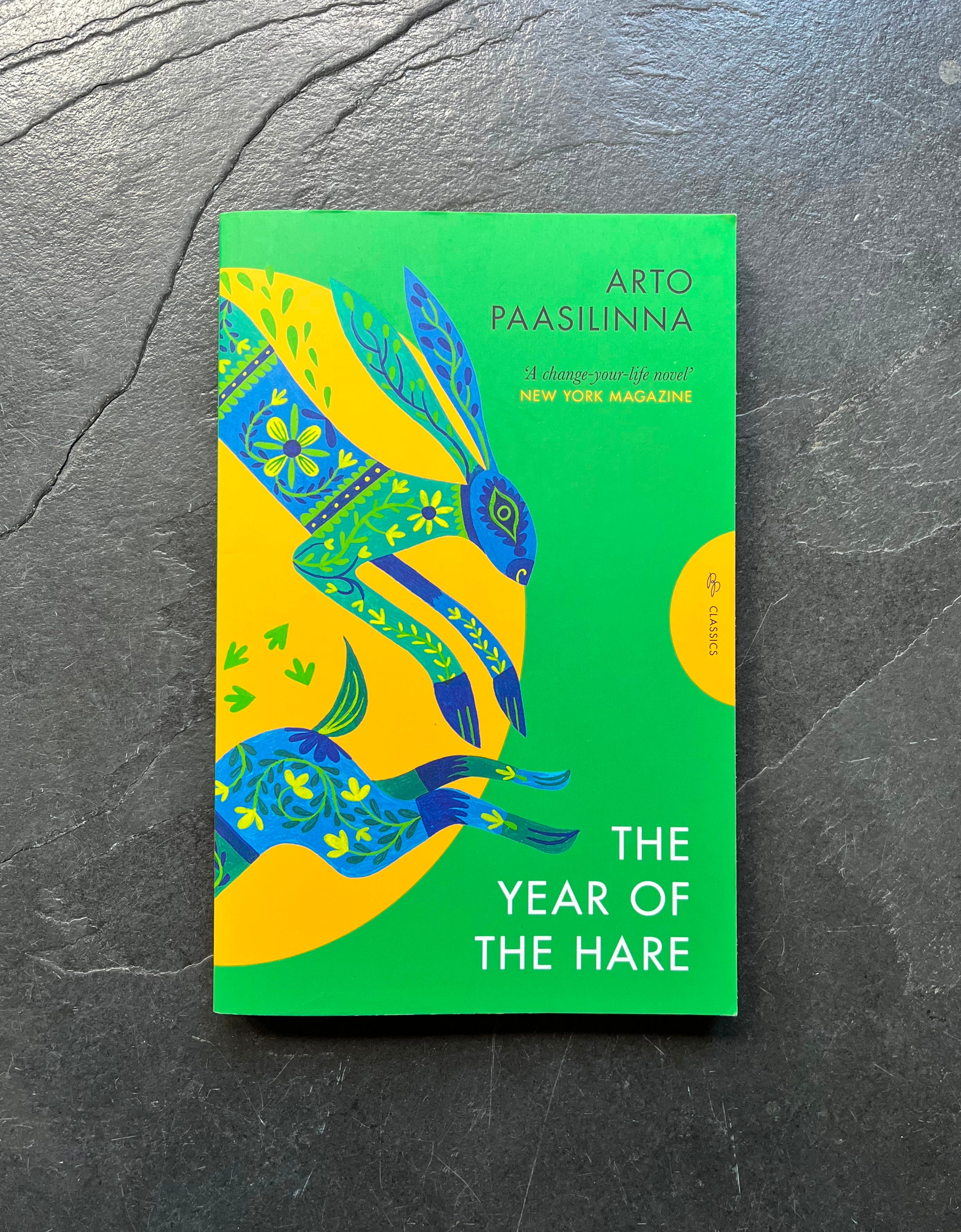
‘The Year of the Hare’ by Arto Paasilinna (translated by Herbert Lomas)
Kaarlo Vatanen, a journalist, is on an assignment with a photographer during midsummer in Heinola, Finland. While driving, they hit a baby hare who is clumsily leaping around the road. They stop and realise it has broken its leg; the photographer isn’t moved, but Vatanen is. He is so utterly absorbed in tending to it, helping to create a splint for the hare’s leg, that he feels compelled to adopt the hare and walk off into the forest. It is at this point we learn that Vatanen is unhappy with his life - he’s fed up with his job, wife and lifestyle. So while Vatanen abandons everything to be with this hare in the forest, Paasilinna provocatively suggests he is not leaving anything of worth behind. What ensues is a year of adventures, with Vatanen traveling around Finland with his companion, the hare.
This is a deeply sweet, but crucially not saccharine, tale about the meaning of life. Vatanen details a soulless past that might feel, to a degree, familiar to some readers. The notions of realising you have spent more years that you intended in that job, relationship or city than you never intended, but feeling powerless in their ability to change it. Paasilinna meditates on the magical allure of the natural world and the temptation that exists within it. Specifically, the lack of constraints on individuality and the absence of institutions that dictate how we spend our time. Within the wilderness, Vatanen finds space to grow, and we get the sense that he experiences more ‘life’ in his year travelling around Finland than all the previous years combined.
The Year of the Hare reminded me of On The Calculation of Volume in how it explores the meaning of life. Both rely heavily on the natural world to explore the concept of time and our relationship to it. In exploring ‘unconventional living’, both Balle and Paasilinna explore the limitations society places on us that disrupt us from living authentically. While the phrase ‘living authentically’ is frequently thrown about in a horrifically insipid and superficial way, these two authors interrogate it from a much more philosophical angle. Namely, asking how the structures we live within in society prevent us from knowing who we truly are. For Vatanen, the meaning of life is found through nature, his freedom to decide what to do and the relationships he forges with others.
Paasilinna’s prose are as sharp and lucid as the escapism the novel embodies. The Year of the Hare evidently wants the reader to enjoy the ludicrous nature of the story, but also encourage a greater introspection on the self. In Vatanen’s enchanting adventure through the seasons lies a much more harrowing truth about the lives we will not get to experience if we don’t take chances. This is a beautiful book, and while its strength occasionally wavered, the overarching philosophy is one I was invested in. The joy and simplicity Vatanen finds in a much slower, meditative way of life is as charming as it is uplifting. Ultimately The Year of the Hare is a novel that just speaks to the sentiment that all we want is to be free. This novel was incredibly easy to connect with and I enjoyed its strange and serious exploration of what it means to have a good life. I’d call this a buy! I included this in my ‘A Translated Summer Reading Guide’ under my ‘liminal summer’ category and I can confirm, it fits the bill!
And that concludes my June Reads! My favourite books of the month were Cathedral and The Year of the Hare.
My first read for July is The Poisonwood Bible by Barbara Kingsolver. A few weeks ago I said that reading one Kingsolver book every summer is my guilty pleasure and some people are not happy with my use of that term!
It’s been amusing to me to see several indictments from others that Kingsolver cannot be my guilty pleasure. Reading Kingsolver IS my guilty pleasure and that’s that. I find her prose easy to read, her narrative pacing incredibly addictive and her stories pleasantly undemanding. This, combined with the promise I made with myself a few years ago to read just one book of hers at the height of every summer, is why she is guilty pleasure of mine. There will be no further questions.
(see reviews of The Lacuna & Prodigal Summer. I read Demon Copperhead in summer 2023 just before I started this newsletter, so no review I’m afraid!)
End Notes
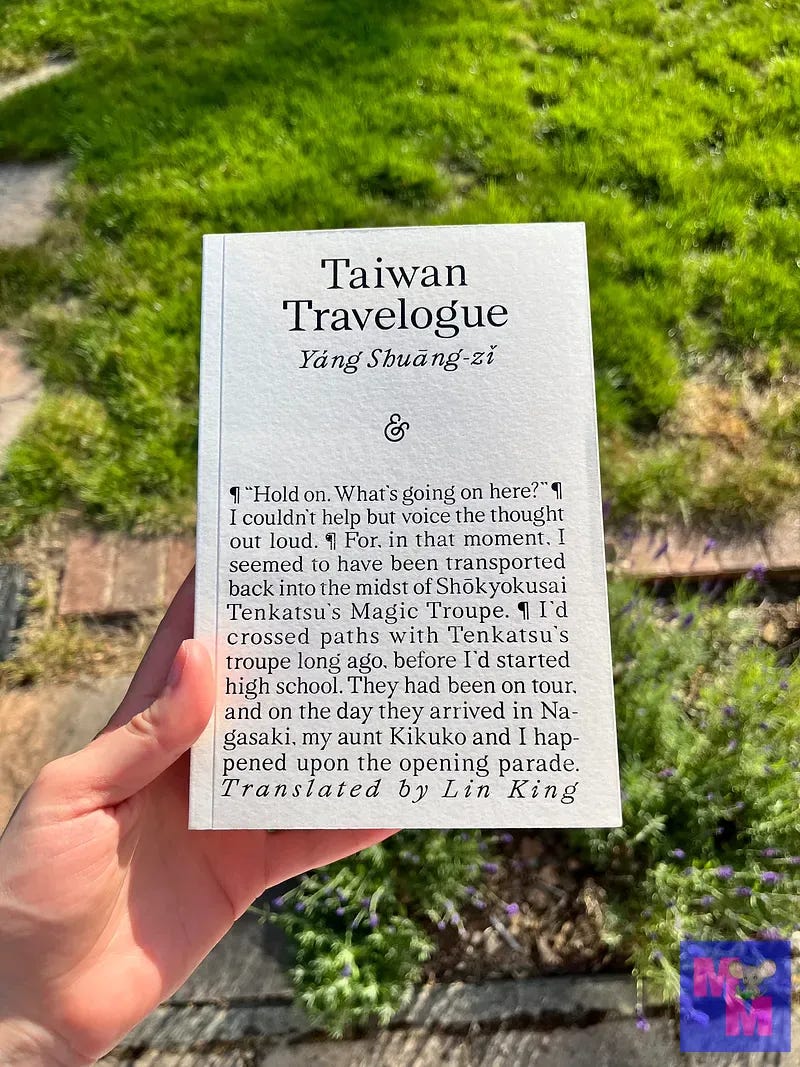
I announced our pick for book club for August. We will be reading Taiwan Travelouge by Yáng Shuāng-zǐ (translated by Lin King) for those of you who would like to join us! Meetings are on the 9th & 12th of August.
asked me to contribute to her post ‘Ten books short enough to read in a summer afternoon’. I recommended Reflections in a Golden Eye by Carson McCullers - my original review of that book can be found here. I really did love this book and I think it would be an excellent summer afternoon read!
A fun announcement:
Readers, I am currently looking for your recommendations for Women in Translation Month (August) for the newsletter. You are the most well read people I know, always leaving incredible recommendations in the comments, but I want to start collecting them with a bit more organisation, and sharing them with the whole community.
Think of it like a Martha’s Monthly community noticeboard, where all the interesting books we read have a place to live, somewhere you can return to for book inspiration. There will be no repeats - if I’ve already reviewed the book, it won’t make the cut. The whole aim of this project is to expand the book discussion beyond what my limitations are as a reader. I can’t read 1,000 books a year (even though I’d like to) but as a group, we are absolutely reading more than that.
To launch this new series (keeping the title a secret until it’s out, but it’s good!!!) I am looking for your women in translation recommendations. I will link the google form here. Leave as few or as many as you want and I will do the rest. I’m truly so excited - I think the variety is going to be excellent. This is just the beginning, so don’t panic if you don’t have a recommendation, there will be lots more opportunities in the future to take part.

Let me know your thoughts:
✹ What have you read and enjoyed in July? Do you have any recommendations for me?
☆ Have you read any of these books? Would you like to?
✼ Who are your guilty pleasure authors or books?! There are no wrong answers in the group. I’d probably call Douglas Stuart one too!
✵ How is your summer reading going? Any recommendations you want to share with us?
Thank you, as always, for being a reader.
Happy Reading,
Love Martha
If you enjoyed this, or anything else you see on Martha’s Monthly, why share it with a friend so they can enjoy it too!!
Catch up on what you might have missed:
And what I read in June 2023; June 2024; and June 2025;
Subscribe if you enjoyed this and want to support the newsletter (and me) <3
The Monthly Reads will always be free, but if you would like to join the book club, consider upgrading your subscription!
P.287 in Cathedrals by Claudia Piñeiro